
The final step is always human
The response is ready, then someone opens the CRM, pastes it, adjusts it and saves it. That is where time savings disappear and errors enter.
More than 180 ready connectors: requests arrive where the team already talks, data lands where the team already keeps it, and billing closes where revenue already comes in. One credit per executed action, no per tool contract and no third party server in between.
"Get the prices from 3 competitors and send them to me in Notion."
Example chain. Reading the request in Slack costs nothing: the credit is charged per executed action: creating the page, writing the row, issuing the coupon.
A polished answer in chat is still copy and paste. What changes operations is the action happening on the other side: the row created, the message sent, the request updated, with no one in between.
The response is ready, then someone opens the CRM, pastes it, adjusts it and saves it. That is where time savings disappear and errors enter.
Connecting two tools takes meetings, an API key, someone to maintain it, and it breaks when that person leaves or the vendor changes the version.
Automation hosted by a third party sees contracts, customers and amounts in transit. For many companies, legal already vetoes that.
A connector is not a black box here: every action is recorded with the request that triggered it, the tool that received it and the result. When someone asks "who changed this", there is an answer.
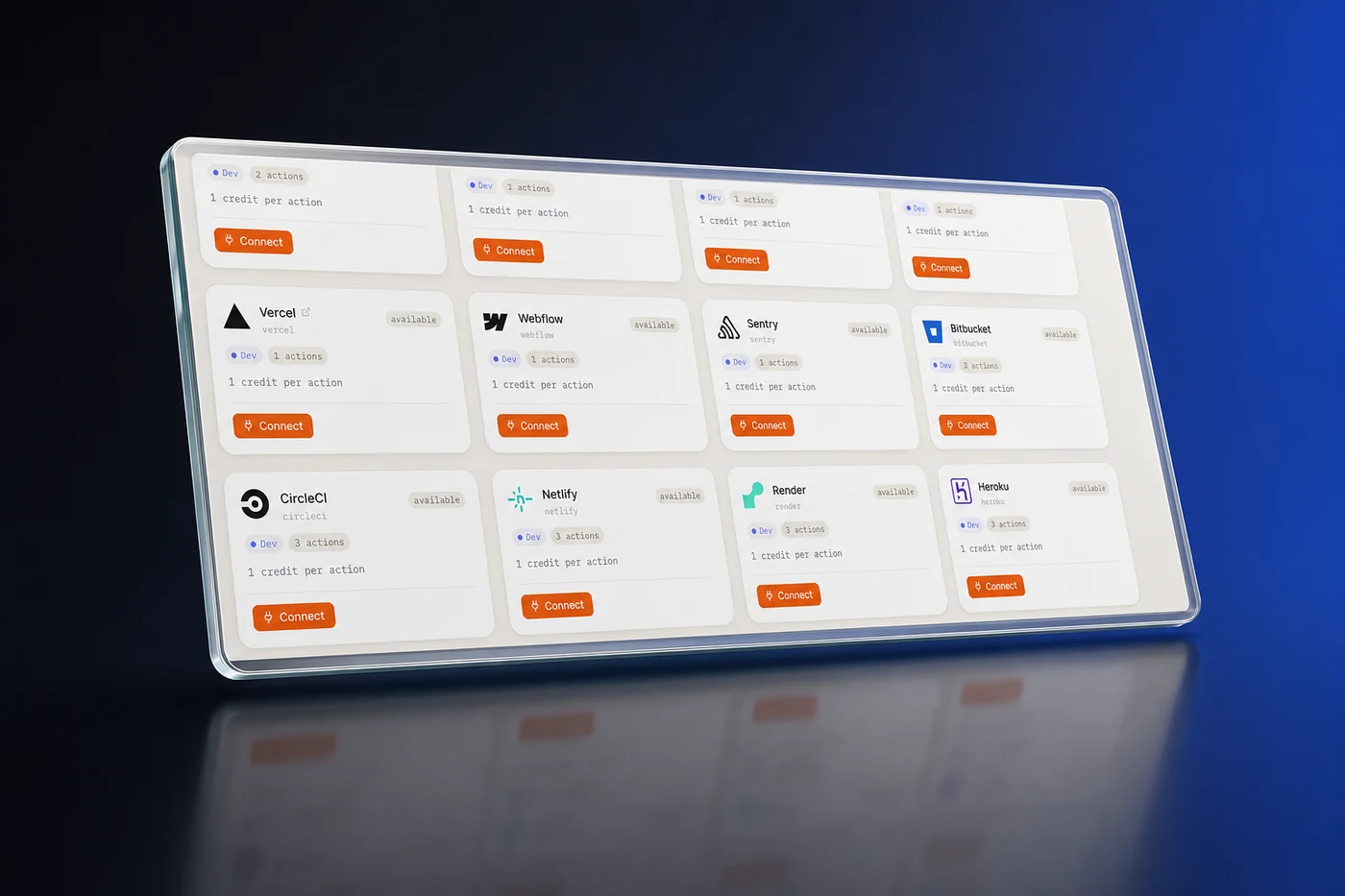
Communication, data, work and sales: the tools the average company already uses, with no integrator needed.
One credit per action executed in a tool. Reading is free; writing is charged, because writing is what changes something.
Tested against the vendor's live environment, with logo and behavior verified. Not a list of logos no one tried to use.
None. The action goes from your infrastructure straight to the tool, with the credential stored in your vault.
The hard part of integration is not calling the API. It is credentials, permissions, errors along the way and someone being able to audit it later.
Encrypted with your key, inside your infrastructure. It is used at the time of the action and is not copied anywhere.
Reading is free; writing to a tool that affects money or customers requires your confirmation: in the channel, before it happens.
If the tool rejects it, its reason appears in your channel. The chain stops at the right point instead of pretending it finished.
Who requested it, what was executed, in which tool, with what result. That is what makes automation auditable.
Cloud automation works, in house integration works and manual copying works. The point is what each one costs in money, maintenance and data leaving the company.
From the catalog of more than 180. If it is there, connect it, no integrator or project needed.
The credential goes into your account vault, encrypted with your key. You choose which actions it can perform.
Written as you would write it to a person. The action happens on the other side and the record remains.
Stop being the bridge between the response and the system. What used to be copy and paste becomes an executed action.
Stop maintaining in-house integrations and being called every time a provider changes the API.
Can approve it, because the credential does not leave the company and every action is recorded.
The row created, the message sent, the record updated.
Who requested it, what ran, what the tool returned.
With the reason returned by the other side, in your channel.
The request starts in the channel and the confirmation returns there. No one needs to open the platform to work.
Reading is free. Credit is used when something changes on the other side, because that is what has value and what costs.
The free plan already unlocks the entire catalog: connect as many tools as you want and use credit only when a real action is executed.
See all plansThe catalog grows with demand and covers what the average company uses. For what is missing, there is a generic connection through API, and if it is a common tool in your sector, it joins the catalog queue.
No. Reading is unrestricted, but writing to a tool that affects customers or money requires your confirmation in the channel before it happens. You also define which actions are allowed for each connector.
In your account vault, encrypted with your key, inside your infrastructure. They are used when the action happens and are not copied anywhere. Revoking them with the provider immediately removes access.
For most AI-related flows, yes, and without another subscription. For purely mechanical flows that already work well, there is no rush: both can coexist, and Connect comes in where the request needs to be interpreted before becoming an action.
Every action is recorded with who requested it, what ran, and what the tool returned. This record is what lets automation pass compliance instead of becoming a black box.
Any module can finish the work inside your tools: that is what keeps the platform from becoming another dashboard you need to remember to open.

Each one solves a front, and all write to the same memory. See the others and how they fit with this one.